Remember the game where one child whispers a sentence and it travels down a line of ten others? "The cat sat on the mat" arrives as "the bat ate my hat". Now imagine that sentence is your website brief.
That's not an insult to big agencies. Many do excellent work, and some projects genuinely need fifteen specialists. But it's worth knowing what changes when the person you speak to on the first call is, or isn't, the person who designs and builds your site.
In the interest of honesty
We're a founder-led studio, so we're not neutral here. We've tried to be fair anyway, including about where we're not the right choice.
Who you actually talk to
Switch between the two. Same project, two ways of running it.
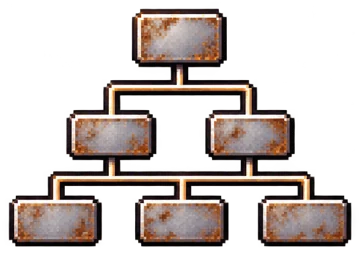
Sales call with a business development manager.
Kickoff with an account manager and a project manager.
Design by a designer you may meet once, reviewed by an art director.
Build by developers you probably won't meet.
Feedback flows back through the account manager.
First call with the founder.
Scope and agreement written by the founder.
Design by the founder, reviewed with you directly.
Build led by the founder, with help where needed.
Feedback goes straight to the person making the change.
The honest trade-offs
Put them on the scale. Tap what matters most for your project.
We need many specialists at onceWe want a big team on standbyProcurement needs a large vendorWe want the senior person doing the workWe want fast, direct decisionsOur budget is for the work, not overheads
What changes, card by card
Fewer handoversTap to flip
Every handover loses a little context. When the person who heard your brief also designs the page, the "why" survives all the way to launch.
Faster decisionsTap to flip
"Can we try the photo on the left?" becomes a five-minute change, not a ticket in a queue.
The catch: capacityTap to flip
One senior person can only run a few projects at once. A good founder-led studio says no, or later, rather than overpromising.
Questions to ask either way
Who will actually design my site? Ask for a name, and whether you'll meet them.
Who do I call when something breaks? After launch, not just during the project.
What's in writing? Scope, price, timeline and what happens if something changes.
Can I see live work they personally made? Not just the agency's portfolio.
What happens when something goes wrong
Projects rarely fail on design. They wobble on timing, misunderstandings and changes of mind. How each setup handles that is worth asking about before you sign.
In a larger agency, problems are usually caught by process: project managers, status reports, escalation paths. That's reassuring, but it can be slow, and the person who could fix the issue is often two steps away from you.
In a founder-led studio, the person who sees the problem is usually the one who can fix it, so things move fast. The risk is different: if the founder is overloaded or unwell, there's less cover. A good studio is upfront about this and plans for it, with clear timelines and someone who can step in on the build.
How to tell which one you're talking to
Some agencies present as founder-led and aren't; some small studios quietly outsource everything. On the first call, ask the person directly: "Will you personally design my homepage?" and "Who writes the code?" Listen for names, not roles. Then ask to see a project they did themselves, and whether you'll have their direct number during the build. The answers sort the two quickly, and honestly, both kinds of team should be happy to give them.
The chef plates it
In a good restaurant, it matters less how big the kitchen is than whether the chef tastes every plate before it leaves. Choose the setup where someone senior tastes yours. For most business websites, that's simpler to find in a small studio. For some projects, it's a big agency with a great lead. Either way, ask who's holding the spoon.
A studio where the founder personally leads and does the core work on each project, from the first call to launch, rather than handing it to account managers and junior teams.
02Is a big agency better than a small studio?
For huge projects needing many specialists at once, often yes. For most business websites, a smaller founder-led team means fewer handovers, faster decisions and the senior person actually doing the work.
03What's the risk with a founder-led studio?
Capacity. One senior person can only take on so many projects at a time, so timelines need to be agreed and kept honestly.
This Privacy Policy explains, in plain language, what personal data BeBoldr Studios (OPC) Private Limited collects, why we collect it, how long we keep it, who we share it with, and the rights you have over it. It is written to meet the Digital Personal Data Protection Act, 2023 (the DPDP Act), the Digital Personal Data Protection Rules, 2025 (the DPDP Rules) and the Information Technology Act, 2000. Please read it before you use our website, Astra or any of our forms.
1. Who we are
1.1 The Data Fiduciary
The Data Fiduciary responsible for your personal data is BeBoldr Studios (OPC) Private Limited ("BeBoldr", "BeBoldr Studios", "we", "us", "our"), a company incorporated in India on 18 June 2024 under the Companies Act, 2013, Corporate Identity Number U74109GJ2024OPC152577, with its registered office at C 202, Khatija Park Society, Near Ram Park, Ajwa Road, Vadodara, Gujarat 390019, India.
1.2 How to reach us about your data
Our Grievance Officer and the person who answers every question about personal data is Aliasgar Barodawala. Email [email protected] or write to the registered office address above. Section 18 explains the full process.
1.3 Who "you" are
"You" means any person whose personal data we process: a visitor to beboldr-studios.com, a person who uses Astra, a person who contacts us or books a call, a client or a client's team member, and anyone else who writes to us. The DPDP Act calls you the "Data Principal".
2. Where this policy applies
2.1 Covered
This policy covers personal data we collect through:
- the website beboldr-studios.com and every page, pop-up and sub-domain we run under it (the "Website");
- Astra, our free website review tool (section 6);
- the contact form, the "Book a call" form and any other form on the Website;
- email, phone calls, WhatsApp messages and video calls with us;
- quotes, agreements, invoices and project work with our clients.
2.2 Not covered
Websites, apps or services run by other companies, even where we link to them (for example Google, WhatsApp, LinkedIn or a client's live website). Their own privacy policies apply.
Personal data that our clients ask us to handle while we build or maintain their websites (for example the customer list in a client's online store). In that work the client is the Data Fiduciary and we act only as their Data Processor, under a written agreement and only on their instructions.
3. The short version
We collect only what we need to answer you, run Astra, and deliver projects.
For Astra we ask for your email (required) and phone (optional). We use them only to prepare and send your report and to answer you about it. We do not use them for lead generation, sales calls or marketing, and we do not add you to any mailing list, unless you separately tick the optional box asking for occasional tips.
We do store your Astra request and report, with your email and phone encrypted, for 12 months, and then delete them automatically.
We never sell, rent or trade your personal data.
You can ask us at any time to see, correct or delete your data, or to withdraw your consent. Email [email protected].
4. The personal data we collect
We collect personal data only from you directly, or created automatically when you use the Website. We do not buy data and we do not collect data about you from data brokers.
4.1 When you use Astra
Website address you type in (for example yourbusiness.com).
Email address — required, so we can send you the report.
Phone number — optional. Used only if we need to reach you about the report (for example if the email bounces).
Consent record — the exact consent text you saw, the policy version, the date and time, and whether you ticked the optional tips box. The law requires us to be able to show that consent was given.
A one-way coded fingerprint of your IP address — your IP address is turned into a short code that cannot be turned back into the address. It is used only to stop the tool being misused (limits on how many checks can run from one connection).
The report itself — the scores, the facts read from the public web page you entered, the written review and a screenshot of that public page.
4.2 When you fill in the contact form or book a call
Name, email, phone or WhatsApp number, your website (optional), what you need (optional) and your message.
The page you sent it from and, if you arrived through a campaign link, that link's campaign tag.
A temporary coded fingerprint of your IP address, used only to limit repeated submissions.
4.3 When you email, call or message us
Your name, email address or phone number, and whatever you choose to write or say. We do not record calls.
4.4 When you become a client
Names, roles and contact details of the people we work with.
Billing details: billing name and address, GSTIN and PAN of the business (where applicable), and payment records. We never see or store your card or bank account numbers — payments go through banks or regulated payment gateways.
Signed agreements, NDAs, briefs, files and logins you share with us for the project. Logins are stored in an encrypted password manager and deleted after hand-over.
4.5 Automatically, when you visit the Website
Server logs — IP address, browser type, device type, the page requested, the referring page, and date and time. Every web server creates these; we use them only for security, fixing errors and stopping abuse.
Preferences saved in your own browser (light or dark mode, sound on or off, accessibility settings, whether you have already seen the intro). These stay on your device and are not sent to us. See the Cookie Notice.
We do not use advertising cookies, cross-site tracking, fingerprinting for advertising, or "remarketing" pixels.
4.6 What we do not want
Please do not send us sensitive personal data you do not need to share — for example health details, financial account numbers, passwords for personal accounts, government ID numbers or data about children. If something like this reaches us by mistake we delete it.
5. Why we use it, and on what legal basis
The DPDP Act allows personal data to be processed either with your consent (Section 6) or for certain legitimate uses (Section 7). Here is each purpose and the basis we rely on.
Basis: your consent, given by ticking the required box.
Kept for: 12 months from the check, then deleted automatically.
5.2 Sending occasional website tips (optional)
Data: email address.
Basis: your separate consent, given only if you tick the optional box. It is unticked by default and Astra works the same whether you tick it or not.
Kept for: until you withdraw consent. Every tips email has a one-click way to stop them.
5.3 Answering your enquiry and arranging calls
Data: the details you put in the contact or booking form, or in your email or message.
Basis: your consent; and the legitimate use of personal data you have voluntarily provided for a specified purpose (Section 7(a)).
Kept for: 24 months from our last conversation if no project follows, then deleted.
5.4 Quoting, contracting, delivering and supporting projects
Data: client contact, billing and project data.
Basis: legitimate use for the purpose you provided it for (Section 7(a)), and compliance with law.
Kept for: for the length of the project and any care plan, and afterwards as long as company and tax law require (see 5.5).
5.5 Keeping legally required records
Data: invoices, payment records, agreements, GST records and related correspondence.
Basis: compliance with law (Section 7), including the Companies Act, 2013, the Central Goods and Services Tax Act, 2017 and the Income-tax Act.
Kept for: as long as those laws require — generally 8 years from the end of the relevant financial year.
5.6 Keeping the Website and our systems secure
Data: server logs, coded IP fingerprints, sign-in records for our own staff.
Basis: compliance with the reasonable security safeguards required by Section 8(5) of the DPDP Act and Rule 6 of the DPDP Rules, and with the IT Act.
Kept for: 1 year, the minimum period the DPDP Rules require for such logs, then deleted.
5.7 Improving Astra and our Website
We look at totals and patterns (for example how many checks ran, average scores, which suggestions appear most often) to improve the tool. We do this without looking at who you are, and we never publish anyone's report.
We will not use your personal data for any purpose that is not listed here. If we ever need a new purpose, we will tell you first and, where the law requires it, ask for your consent.
6. Astra in detail
6.1 What Astra does
Astra is a free tool that reviews a public web page. When you press the button, it:
- reads the public page at the address you typed, the way any visitor's browser would;
- asks Google PageSpeed Insights to test that page on a phone and on a computer, which returns scores and a screenshot of the page;
- asks Google Gemini, an AI model, to look at that screenshot and the measured facts and write a short, friendly review;
- shows you the report and emails it to you.
The check runs on our server, so it carries on and the report is still emailed to you if you close the page or leave the Website.
6.2 What is sent to Google
Only the web address and information about that public web page (the screenshot and the measured facts) are sent to Google PageSpeed Insights and Google Gemini. For Astra, your email address, phone number and IP address are never sent to Google or to any AI service.
6.3 What is not done with your details
Your email and phone are used only to deliver your report and to answer you about it. We do not:
- call you, message you or send you offers because you ran a check;
- treat a check as an enquiry or add you to a sales pipeline;
- add your email to a mailing list (unless you tick the optional tips box);
- share your details with anyone else for their own use.
If you would like to talk to us about the report, you can book a call — that is always your choice.
6.4 Storage and deletion
Each check is stored on our server as a single record. Your email and phone are encrypted inside that record. The record, the report and the screenshot are deleted automatically 12 months after the check, or sooner if you ask.
6.5 About the report
The report is created automatically by software and an AI model. It is an opinion about a website, not a decision about you, and it has no legal or similar effect on you. Scores can vary a little between runs. The AI can make mistakes; we design it to stick to measured facts and to be honest, including saying so when a website is already very good.
6.6 Checking a website that is not yours
You may check any public website. Astra only reads what is already openly published. Please do not enter addresses that contain private information (for example a link with a password, a personal token or someone's personal details in it).
7. Consent
7.1 What your consent looks like
Where we rely on consent, it is free, specific, informed, unconditional and unambiguous, given by a clear action such as ticking a box. Boxes are never pre-ticked. You can always see what you agreed to: we keep the exact wording and time.
7.2 Withdrawing consent
You can withdraw consent at any time, as easily as you gave it — email [email protected] with the subject "Withdraw consent", or use the stop link in any tips email. After you withdraw:
- we stop the processing that relied on that consent within a reasonable time, and in any case within 7 days;
- we delete the related personal data, unless a law requires us to keep it (for example an invoice);
- anything we lawfully did before you withdrew remains valid.
Withdrawing consent for Astra means we can no longer send you that report again or answer you about it. Withdrawing tips consent only stops the tips.
7.3 Consent Managers
Once Consent Managers registered with the Data Protection Board of India are available, you may give, manage, review and withdraw your consent to us through one of them.
8. Your rights
Under the DPDP Act you have the right to:
- Access — a summary of the personal data we hold about you and what we do with it, and the identities of the Data Fiduciaries and Data Processors we have shared it with, with a description of what was shared (Section 11).
- Correction, completion and updating — to have inaccurate or incomplete data corrected or completed, and out-of-date data updated (Section 12).
- Erasure — to have your personal data deleted when it is no longer needed for the purpose, or after you withdraw consent, unless a law requires us to keep it (Section 12).
- Grievance redressal — to have your complaint about our handling of your data answered by us (Section 13).
- Nomination — to nominate another person who may exercise these rights for you in the event of your death or incapacity (Section 14).
8.1 How to use your rights
Email [email protected] with the subject line "Data request" and tell us which right you want to use. Write from the email address you used with us, or tell us the details you gave us, so we can confirm it is really you. We may ask for a small amount of extra information to verify your identity; we use it only for that and then delete it.
8.2 How quickly we answer
We confirm receipt within 2 working days and complete your request within 30 days. If a request is complex we will tell you why and when we will finish. There is no charge.
8.3 When we may say no
We may refuse or limit a request only where the law allows — for example if we must keep an invoice for tax law, if we cannot confirm who you are, or if a request would reveal someone else's personal data. We will always explain why.
9. Your duties
The DPDP Act (Section 15) also asks you to:
- comply with applicable law when you use our services;
- not impersonate another person when giving us personal data;
- not suppress any material information when giving personal data for any document, unique identifier, proof of identity or proof of address issued by the State or its agencies;
- not register a false or frivolous grievance or complaint;
- give only verifiably authentic information when you ask us to correct or erase data.
10. How long we keep personal data
We keep personal data only as long as needed for the purpose it was collected for, and then delete it, unless a law requires us to keep it longer.
- Astra checks (request, report, screenshot): 12 months.
- Tips consent: until you withdraw.
- Enquiries and call bookings with no project: 24 months from our last contact.
- Client project records: the project and any care plan, then up to 8 years after the end of the financial year for records the law requires us to keep; all other project files are deleted or returned after hand-over and any agreed support period.
- Server and security logs: 1 year.
- Backups: backups are overwritten on a rolling cycle of no more than 30 days, so deleted data leaves the backups within that time.
Where the DPDP Rules require us to tell you before we erase your data because you have not been in touch for a long period, we will notify you at least 48 hours before the erasure, so you can contact us if you want us to keep it.
11. Who we share personal data with
We share personal data only when it is needed for a purpose in section 5, only with organisations bound by a written contract to protect it, and only as much as they need. We never sell or rent personal data.
11.1 Our Data Processors
Web hosting provider — stores the Website and the records described here on its servers.
Email delivery provider — sends your Astra report and our replies.
Google LLC (PageSpeed Insights and Gemini API) — receives only the web address and public-page information for Astra, never your contact details (section 6.2).
Google LLC (Google Analytics 4) and Microsoft Corporation (Microsoft Clarity) — only if you accept analytics: the pages you visit, your approximate location (country and city), your device and browser, and anonymous information about how you use the pages. They never receive what you type into our forms.
Brevo (Sendinblue SAS, France) — delivers our emails: the confirmation we send you after you contact us, and the alert our team receives with the details of your request.
WhatsApp (Meta Platforms) — only if you choose to message us on WhatsApp.
Banks and payment gateways — to receive client payments.
Accountants and auditors — for statutory books and tax filings.
11.2 Others
Authorities, when we are legally required to share information with a government body, court or regulator, or to protect our legal rights.
A successor company, if our business is merged, acquired or restructured, under this same policy.
12. Transfer outside India
Some of our Data Processors (for example Google) may process data on servers outside India. The DPDP Act allows this except to any country the Central Government restricts by notification under Section 16, and subject to any conditions it sets under the DPDP Rules. We do not transfer personal data to any restricted country, and we follow every condition the Government notifies.
13. How we protect personal data
We take reasonable security safeguards, as required by Section 8(5) of the DPDP Act and Rule 6 of the DPDP Rules, including:
- Encryption — the Website runs only over HTTPS; email addresses, phone numbers and other personal details in Astra and form records are stored encrypted with a strong cipher, and the keys are kept apart from the data.
- Access control — only authorised people can open personal data, using individual accounts protected by two-factor authentication and recovery codes.
- Logging and monitoring — access to our systems is logged and the logs are kept for 1 year, so unauthorised access can be detected and investigated.
- Data minimisation — we collect only what we need; IP addresses are stored only as one-way codes in Astra and forms.
- Limits and protection against abuse — rate limits, a human check and spam traps on every form.
- Backups — regular backups so data can be restored if it is lost.
- Contracts and confidentiality — every person and provider who handles personal data for us is bound by confidentiality and data-protection obligations.
14. If something goes wrong
If there is a personal data breach, we will:
- inform every affected person without delay, in plain language, describing the breach, its likely consequences, what we are doing to limit them, what you can do to protect yourself, and who to contact;
- inform the Data Protection Board of India without delay and give it a full report within 72 hours of becoming aware of the breach, as Rule 7 of the DPDP Rules requires;
- fix the cause and take steps to stop it happening again.
15. Children and persons with disabilities
15.1 Children
Our Website and Astra are meant for adults and businesses. We do not knowingly collect personal data from anyone under 18. Where the law requires, we will process a child's personal data only with the verifiable consent of a parent or lawful guardian, as Section 9 of the DPDP Act and Rule 10 of the DPDP Rules require, and we never track, monitor or target advertising at children. If you believe a child has given us personal data, email [email protected] and we will delete it.
15.2 Persons with disabilities
Where a person with a disability has a lawful guardian, we will process their personal data with the verifiable consent of that guardian, as the DPDP Act and Rules require.
16. Cookies and similar technology
We set no advertising cookies. Only if you accept analytics on the cookie banner do we use Google Analytics 4 and Microsoft Clarity to understand how the Website is used; what they collect, the cookies they set and how to change your choice are explained in our Cookie Notice, together with the few preferences the Website saves in your own browser.
17. Links to other websites
The Website links to other websites — for example the live websites of brands we have built, Google Maps or WhatsApp. We are not responsible for the content or privacy practices of those websites.
Post: Grievance Officer, BeBoldr Studios (OPC) Private Limited, C 202, Khatija Park Society, Near Ram Park, Ajwa Road, Vadodara, Gujarat 390019, India
18.2 What happens
We acknowledge every grievance within 2 working days and resolve it within 30 days. We will tell you what we found and what we have done.
18.3 The Data Protection Board of India
If you are not satisfied with our answer, you may complain to the Data Protection Board of India under Section 13(3) of the DPDP Act, once you have first used our grievance process.
19. Language
This policy is in English. You may ask for it in any language listed in the Eighth Schedule to the Constitution of India by emailing [email protected]; we will send it within a reasonable time.
20. Changes to this policy
We may update this policy when our services or the law change. The date and version at the top always show the current version. If a change affects how we use personal data you have already given us, we will tell you before it takes effect and, where the law requires, ask for your consent again.
Last updated: 23 November 2026
No advertising
This Website sets no advertising cookies and runs no advertising pixels or remarketing tags.
Analytics, only if you say yes
On your first visit a small banner asks whether we may use analytics. Only if you choose Accept do we load:
- Google Analytics 4 (Google LLC) — counts visits and shows which pages are read, roughly which country and city visitors come from, which website or search brought them, and which device and browser they use. It sets the cookies `_ga` and `_ga_<ID>`, kept for up to 2 years.
- Microsoft Clarity (Microsoft Corporation) — shows how pages are used, as heatmaps of clicks and scrolling and as anonymous recordings of visits, so we can fix anything confusing. Text you type into forms is masked and never recorded. It sets the cookies `_clck` (1 year) and `_clsk` (1 day).
If you choose Decline, neither tool is loaded and none of these cookies is set. You can change your choice at any time with Cookie settings in the menu; if you withdraw consent, we stop the tools and delete their cookies from this Website.
What is saved in your browser
To remember your choices, the Website saves a few small preferences in your own browser's storage. They never leave your device and contain no personal data:
- Light or dark mode — so the Website opens the way you left it.
- Sound on or off — so the Website stays quiet if you turned the sound off.
- Accessibility settings — reduced motion, larger text, higher contrast and underlined links.
- Scroll hint — so the "scroll" hint is not shown again once you have seen it.
- Your latest Astra report — the report for the website you checked (no email or phone), so it is still there if you reload or browse to another page. It is replaced when you check another website.
- Your cookie choice — whether you accepted or declined analytics, kept for 12 months so the banner does not ask again.
- Intro seen — remembers, only until you close the tab, that you have already watched the opening animation, so it does not play on every page.
You can clear them at any time from your browser settings; the Website will simply use its defaults.
Astra and the forms
Astra, the contact form and the booking form set no cookies. They use a short hidden code on the page to stop spam and automated abuse.
Our team's sign-in
Our own content system (Studio) uses one strictly necessary, secure cookie to keep our team signed in. It is never set for visitors.
If this changes
If we add any other cookie that is not strictly necessary, we will update this notice first and ask for your consent before setting it.
These Terms of Use (the "Terms") are a legally binding agreement between you and BeBoldr Studios (OPC) Private Limited, a company incorporated in India under the Companies Act, 2013, CIN U74109GJ2024OPC152577, registered office C 202, Khatija Park Society, Near Ram Park, Ajwa Road, Vadodara, Gujarat 390019, India ("BeBoldr", "we", "us", "our"). They govern your use of the website beboldr-studios.com, its pages, pop-ups and sub-domains (the "Website"), and Astra, our website review tool. By using the Website or Astra you accept these Terms. If you do not accept them, please do not use the Website.
These Terms are an electronic record under the Information Technology Act, 2000 and the rules made under it, and need no physical or digital signature.
1. Definitions
"Content" means everything on or produced by the Website: text, copy, headings, illustrations, pixel art, characters, scenes, images, photographs, mockups, screenshots, videos, motion, animations, sound, music, icons, logos, layouts, page structure, interaction design, "look and feel", data, reports and any other material.
"Code" means all software that runs the Website and Astra: HTML, CSS, JavaScript, PHP, WebGL and GLSL shaders, templates, the custom content management system, build scripts, prompts, rules, scoring logic and configuration, whether readable or obfuscated, in source or compiled form.
"Astra" means our free website review tool and the reports it produces.
"Services" means the design, development, and related services we provide to clients under a separate written agreement.
2. Who may use the Website
You must be at least 18 years old and able to form a binding contract under the Indian Contract Act, 1872. If you use the Website on behalf of a business, you confirm you are authorised to accept these Terms for it.
3. The Website is information, not an offer
3.1 Information only
The Website describes our studio, our work and our Services. Nothing on it is an offer capable of acceptance. Prices are starting prices in Indian Rupees, exclude GST and other applicable taxes unless stated, and may change without notice.
3.2 Projects run on a written agreement
Every project is governed by a separate written proposal, agreement and NDA signed by both sides. If anything in those documents differs from these Terms, those documents prevail for that project.
4. Astra
4.1 What you get
Astra is free. It reviews a public web page and gives you scores and suggestions. Scores come from Google PageSpeed Insights at the moment of the test and may vary between runs. The written review is produced automatically by software and an AI model.
4.2 No guarantee
The report is general information and an informed opinion, provided "as is". It is not professional, legal, financial or technical advice, and it may contain mistakes. We do not guarantee any result from acting on it, including any change in rankings, traffic, enquiries or sales. You decide what to change on your website and you are responsible for those changes.
4.3 Fair use
You agree to:
- enter only addresses of publicly available web pages, with no private tokens, passwords or personal information in them;
- use Astra by hand, through the form on the Website — no bots, scripts, automated or bulk requests;
- respect the limits on how many checks can run per person and per day;
- not use Astra to attack, overload or probe any website or system.
We may refuse, limit, pause or stop Astra for anyone, at any time, without notice.
4.4 Your report
You may use your report for your own business and share it with people who help you with your website. The report format, wording, scoring logic, prompts and the Astra tool itself remain our property (section 5).
4.5 Your details
How we handle the email and phone number you give us for Astra is explained in our Privacy Policy.
5. Intellectual property — everything here belongs to BeBoldr
5.1 Ownership
All Content and all Code, and every part, element, fragment and combination of them — including the design of every page, the illustrated world, the character and its animations, the curtain and rope interaction, every scene, effect and shader, the sound design, the case study layouts and pop-ups, the services workbench, the icons, the custom content management system, Astra and its reports, the selection, arrangement and compilation of all of it, and the overall look, feel and experience of the Website — are the sole and exclusive property of BeBoldr Studios (OPC) Private Limited (or are used under licence from their owners, where stated).
They are protected by the Copyright Act, 1957, the Trade Marks Act, 1999, the Designs Act, 2000, the Information Technology Act, 2000, the law of confidentiality and passing off, and international treaties including the Berne Convention, in India and worldwide.
5.2 Trade marks
"BeBoldr", "BeBoldr Studios", "Astra", our logos, marks and the character are our trade marks, whether registered or not. You may not use them, or anything confusingly similar, without our written permission.
5.3 The only permission you get
We give you a limited, personal, non-exclusive, non-transferable, revocable permission to view the Website in a normal web browser for the purpose of learning about us and our Services. No other right or licence is given, by implication or otherwise. All rights not expressly granted are reserved.
5.4 What you may not do
Without our prior written permission you must not, and must not help anyone else to, in whole or in part:
- copy, reproduce, download, save, record, screenshot for reuse, print for distribution, or store any Content or Code, except for the temporary copies your browser makes automatically to display the page;
- reuse, imitate, recreate or adapt our designs, layouts, illustrations, characters, scenes, interactions, animations or overall look and feel in any website, app, template, theme, presentation, portfolio, product or other work — including work described as "inspired by", "a tribute to" or "similar to" ours;
- view, extract, copy, reverse-engineer, decompile, disassemble, de-obfuscate or reconstruct the Code, or try to obtain the Code in readable form;
- modify, translate, create derivative works from, or remove, hide or alter any copyright notice, fingerprint, watermark or identifier in the Content or Code;
- scrape, crawl, mirror, frame, harvest or systematically collect any Content or Code, by hand or by automated means;
- use any Content or Code to train, fine-tune, test or improve any artificial intelligence or machine learning system, or include it in any dataset;
- sell, license, sub-license, rent, publish, distribute, transmit, display publicly or otherwise exploit any Content or Code commercially;
- present any of our work, or work derived from it, as your own or as anyone else's.
5.5 Work shown for clients and brands
Names, logos and brand assets of the businesses shown on the Website belong to their respective owners and appear with their permission or as part of work we created. Studio projects shown on the Website, including their names, brand identities, designs, copy and code, are our property unless we have transferred them in writing. Rights in client projects are governed by each client's agreement.
5.6 Identification and enforcement
The Code and Content contain hidden identifiers that let us detect copies. We actively look for copies of our work. Any use in breach of this section infringes our rights and may lead to:
- civil action for injunction, damages, accounts of profits and delivery-up under Sections 55 and 62 of the Copyright Act, 1957 and the Trade Marks Act, 1999;
- criminal complaint under Section 63 of the Copyright Act, 1957 and Sections 43 and 66 of the Information Technology Act, 2000, where applicable;
- takedown notices to hosting providers, search engines, marketplaces and platforms.
You will also be responsible for our reasonable legal costs of enforcement.
5.7 Permissions
If you would like to use any of our Content — for example to quote us in an article — email [email protected]. Permission is valid only if given in writing by us.
5.8 If you think something here is yours
If you believe anything on the Website infringes your rights, email [email protected] with details of the work, where it appears on the Website, and your contact details. We will look into it promptly and remove the material if your claim is valid.
6. Acceptable use
When you use the Website you must not:
- break any applicable law, or help anyone else do so;
- attempt to gain unauthorised access to the Website, our servers, Studio (our content system) or any account;
- test, scan or probe the Website for vulnerabilities, or carry out any security testing, without our written permission;
- upload or send viruses, malware or any harmful code;
- overload, flood or disrupt the Website, or interfere with anyone else's use of it;
- use bots, scrapers or automated tools on any form or page;
- submit false, misleading or someone else's information, or impersonate anyone;
- send spam, unlawful, abusive, defamatory or obscene content through our forms.
If you find a security issue, please tell us at [email protected] and do not use or share it.
7. Things you send us
7.1 Your enquiries and briefs
Information you send us about your business or project is treated as confidential and used only to answer you and quote for the work. Once an NDA is signed, the NDA governs it.
7.2 Feedback
If you send us general suggestions or ideas about our Website, Astra or Services, you agree that we may use them freely, with no obligation to you.
7.3 Your rights to what you send
You confirm you have the right to send us anything you share (for example images, logos or text), and that it does not infringe anyone's rights.
8. Third-party services and links
The Website uses or links to services run by others, such as Google PageSpeed Insights, Google Gemini, Google Maps, WhatsApp and the live websites of brands we have built. We do not control them and are not responsible for their content, availability or practices. Your use of them is governed by their own terms.
9. Availability and changes
We may change, suspend or stop any part of the Website or Astra at any time without notice. We aim to keep the Website available and secure but do not promise it will always be available, uninterrupted, error-free or free of harmful components.
10. Disclaimer
To the fullest extent the law allows, the Website, its Content and Astra are provided "as is" and "as available", without warranties of any kind, express or implied, including any warranty of accuracy, completeness, fitness for a particular purpose or non-infringement. Nothing in these Terms limits any right you have that cannot be limited by law.
11. Limitation of liability
To the fullest extent the law allows:
- we are not liable for any indirect, incidental, special, consequential or punitive loss, or for loss of profit, revenue, business, goodwill, data or opportunity, arising from your use of the Website or Astra;
- our total liability to you for anything arising from the Website or Astra is limited to ₹1,000.
This section does not limit liability that cannot be limited by law, including for fraud. Liability for client projects is governed by the project agreement.
12. Indemnity
You agree to compensate and hold harmless BeBoldr Studios (OPC) Private Limited, its director, staff and partners from any claim, loss, damage, penalty or cost (including reasonable legal fees) arising from your breach of these Terms, your misuse of the Website or Astra, or your infringement of anyone's rights, including ours.
13. Suspension and termination
We may suspend or end your access to the Website or Astra immediately, without notice, if we reasonably believe you have broken these Terms. Sections 5, 10, 11, 12, 14 and 15 continue to apply after your access ends.
14. Governing law and disputes
14.1 Law
These Terms are governed by the laws of India.
14.2 Talk first
If you have a concern, please email [email protected] first. We will try in good faith to resolve it within 30 days.
14.3 Arbitration
Any dispute that is not resolved within 30 days will be finally settled by arbitration under the Arbitration and Conciliation Act, 1996, by a sole arbitrator appointed by mutual agreement. The seat and venue of arbitration will be Vadodara, Gujarat, and the language will be English.
14.4 Courts
Subject to arbitration, the courts at Vadodara, Gujarat have exclusive jurisdiction. Nothing in this section stops us from seeking urgent injunctive relief from any court of competent jurisdiction to protect our intellectual property.
15. General
Entire agreement — these Terms, together with our Privacy Policy and Cookie Notice, are the whole agreement between you and us about the Website.
Severability — if any part of these Terms is found invalid or unenforceable, the rest stays in force.
No waiver — if we do not enforce a right straight away, we have not given it up.
Assignment — you may not transfer your rights under these Terms. We may transfer ours to a successor of our business.
Force majeure — we are not responsible for any delay or failure caused by events beyond our reasonable control.
Notices — we may give you notice by email or on the Website. You may give us notice at [email protected] or by post to our registered office.
16. Changes to these Terms
We may update these Terms from time to time. The date and version at the top show the current version. Changes apply from the moment they are published on the Website; please check this page when you use the Website.
17. Contact
BeBoldr Studios (OPC) Private Limited · CIN U74109GJ2024OPC152577
C 202, Khatija Park Society, Near Ram Park, Ajwa Road, Vadodara, Gujarat 390019, India
Email: [email protected] · Grievance Officer: Aliasgar Barodawala
We aim to meet WCAG 2.2 AA. Every word on this site is real text, the site works with a keyboard, and motion follows your device's reduced-motion setting. Adjust it here:




 Fewer handoversTap to flip
 Faster decisionsTap to flip
 The catch: capacityTap to flip